
Home → Blog → Restaurant Growth → How to Get Repeat Customers Without a Loyalty App
How to Get Repeat Customers Without a Loyalty App
Loyalty apps aren't what actually brings restaurant customers back. Here's what does — and how small, independent restaurants can build real repeat business without an app or a points system.
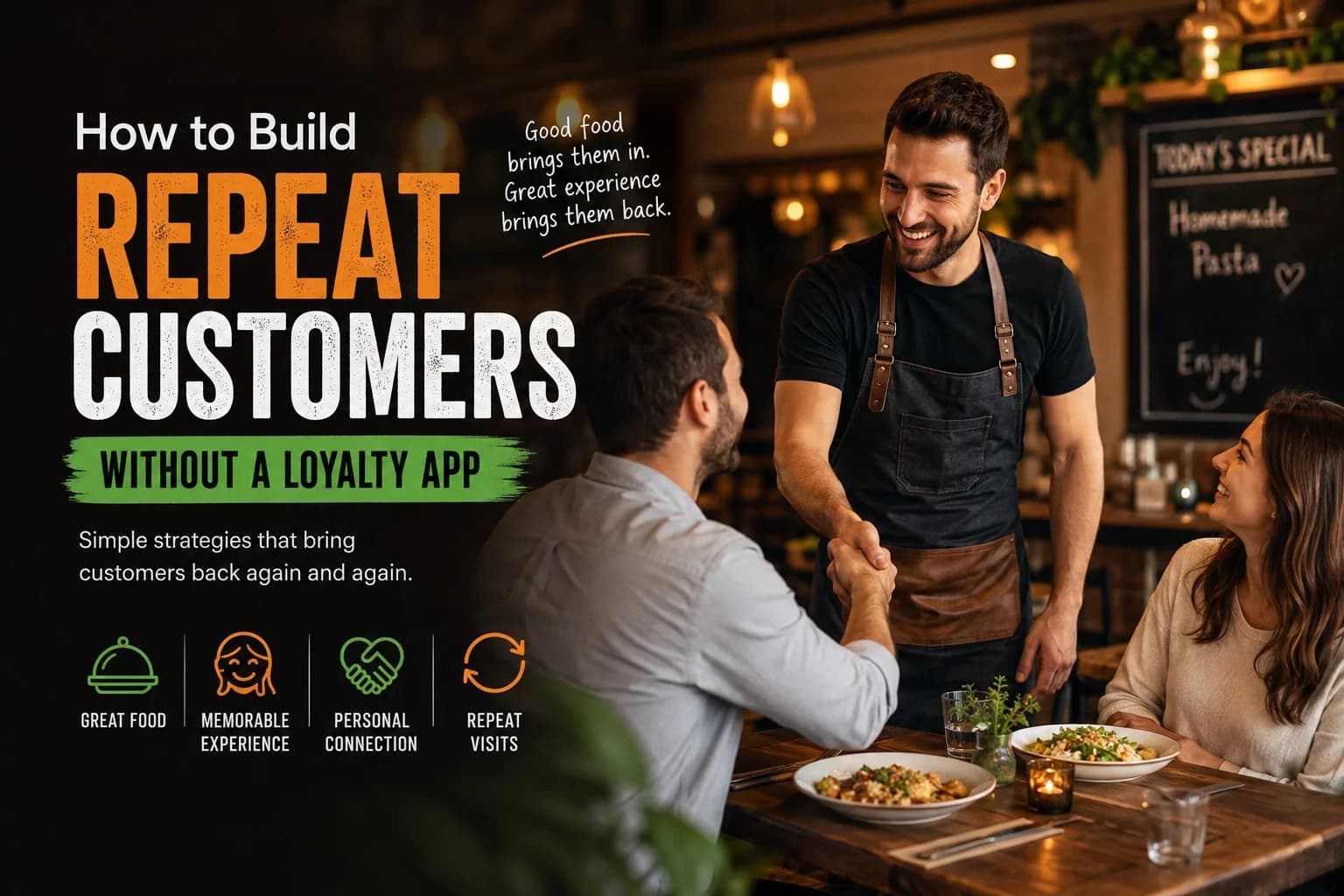
How to Get Repeat Customers Without a Loyalty App
Every restaurant owner knows the feeling. A table full of first-timers finishes their meal, says the food was great, pays the bill — and you never see them again.
Getting someone through the door once isn't the hard part. Marketing, foot traffic, a good listing on Google Maps, a friend's recommendation — any of these can bring in a first-time customer. The hard part is giving them a reason to choose you again next time they're deciding where to eat.
A lot of owners jump straight to loyalty apps when they think about this problem. Download our app, collect points, scan a QR code, hit ten stamps, get a free appetizer. For a chain with marketing budget and an IT team, that can work. For a neighborhood restaurant with a handful of staff and a lot on their plate already, it's usually more infrastructure than the problem needs.
Repeat business is mostly built from things you're already in a position to do — you just have to do them on purpose.
Consistency Is the Real Loyalty Program
No promotion fixes food that disappoints. A discount might get someone to try you once, or even twice. But if the meal isn't good, or isn't consistently good, nothing else on this list will matter much.
This is worth being specific about. If a regular's favorite dish — say, your chicken karahi or your grilled fish tacos — tastes noticeably different from one visit to the next, that's a trust problem, not a seasoning problem. Customers don't expect every dish to be flawless. They expect the version they loved last time to show up again this time. Portion size, temperature, plating, flavor — the goal is that a customer can order blind and know roughly what they're getting.
That predictability is what trust is built on, and trust is the actual foundation loyalty apps are trying to simulate with points.
Give People Something to Actually Remember
Ask yourself honestly: if someone ate at your restaurant today, what would they still remember tomorrow? If the answer is "nothing in particular," that's the gap to close — not with a rewards tier, but with something distinctive.
This doesn't need to be dramatic. It might be:
- A sauce or spice blend nobody else in the area makes
- A server who remembers regulars' orders
- A dish that's genuinely unlike anything else on your menu
- A small, consistent gesture — a complimentary starter, a handwritten note on the receipt
The goal is a single sentence a customer could say to a friend: "You have to try the [X] at that place near [landmark]." If your menu has forty items and nothing stands out, you're harder to recommend, and harder to remember. A tighter, well-defined signature dish or two beats a sprawling menu where nothing is the thing. If you want to dig into this specifically, it overlaps a lot with how your menu is structured and priced — worth reading alongside Restaurant Menu Design & Psychology.
Make Coming Back Genuinely Easy
Sometimes a customer wants to return and simply can't find the information to do it. They don't remember your hours. They can't recall if you're open on Mondays. Your last Instagram post about the menu is from three weeks ago and doesn't say if the dish is still available.
This is one of the more fixable problems on this list, because it's not about hospitality — it's about having a reliable, up-to-date place for people to check. A basic website that lists your hours, location, phone number, and current menu solves most of this on its own. It doesn't need to be elaborate. It needs to be accurate.
This is also where a lot of small restaurants get stuck, because updating a website usually means calling a developer every time a price or a dish changes — so the site quietly goes stale. Menuberg exists mostly to remove that bottleneck: you get a simple restaurant website with your menu, hours, and contact details, and you edit the menu yourself whenever something changes, without touching code. If you'd rather build this from scratch yourself, How to Create a Restaurant Website Without Hiring a Developer walks through that option too.
Recognize Your Regulars — Genuinely
This is the one loyalty apps can't replicate, and it costs nothing.
If someone comes in every Thursday and orders the same thing, noticing that is worth more than a stamp card. "The usual?" said sincerely does more for a regular than a 10% discount code they'll forget to use. Big chains can offer sophisticated apps. A small, independent restaurant can offer something a chain structurally can't: a staff who actually knows you.
This works best when it's not just the owner carrying it. Encourage staff to pick up on small, useful details — a preferred table, a dietary note, a regular order — and pass them along naturally. Keep it hospitality, not surveillance; nobody wants to feel tracked. But a server who remembers "no onions" without being asked twice is doing more for retention than most apps manage.
Use Discounts Sparingly, Not as a Crutch
Discounts absolutely bring people back — but if a discount becomes the reason someone returns, you've trained them to wait for the next one instead of wanting the food on its own terms. "I'll come back when there's a deal" is a weaker relationship than "I want to eat there again."
An occasional, well-timed offer is fine. A restaurant that needs a standing 30% discount to get repeat visits usually has a value problem, not a loyalty problem — and no amount of promotion fixes that long-term.
Small, unexpected extras tend to work better than predictable discounts anyway: a free dessert sample, a slightly bigger portion than usual, a note thanking a regular by name. Because it's unearned and unexpected, it reads as generosity rather than a transaction — and it's the kind of thing people mention to friends.
Ask, Listen, and Actually Fix Things
If you want to know why customers don't come back, the fastest way to find out is to ask them. It doesn't need to be a formal survey — a server asking "how was everything?" and actually listening to the answer is enough to catch patterns: food taking too long, portions feeling smaller than before, parking being a hassle, a menu that's confusing to navigate.
What matters more than the mistake itself is how you respond to it. A dish arrives wrong, an order is late, something's missing — customers generally don't expect perfection, but they remember whether the restaurant owned the problem or got defensive about it. A calm, genuine fix turns a bad moment into a reason to trust you more, not less.
Keep People in the Loop Without Overdoing It
A new seasonal dish, a weekend special, a returning favorite item — small, occasional changes give regulars a reason to check back in. You don't need to overhaul the menu monthly. You need enough movement that someone thinks, "they've got something new, let's go."
Social media is useful here mainly as a reminder, not a megaphone. A feed that's all "ORDER NOW — 20% OFF" trains people to scroll past. A feed that shows what's actually happening — a new dish, a full table on a Friday night, the kitchen prepping — is more likely to make someone think "I haven't eaten there in a while" and act on it. If budget is the constraint, Restaurant Marketing on a Small Budget covers this in more depth. If you're weighing how much to lean on social versus your own site, Restaurant Website vs Facebook & Instagram is worth a look too — a site you control tends to outlast a feed's algorithm changes.
The same logic applies if you message customers directly. A "your favorite dessert is back this weekend" text lands well. A discount code every Monday morning gets muted.
Make the Menu Itself Easy to Revisit
If someone's deciding whether to go back, checking the menu is often the last step before they commit. That menu needs to be easy to find, load fast on a phone, and actually reflect what you're currently serving. A dish that disappeared two months ago but is still listed online is a quiet source of disappointment for a returning customer.
This is also somewhere QR codes are underused. Most restaurants only put one on the table for the in-house menu, but a code that links straight to your online menu, your Google review page, or a seasonal special works just as well on a receipt, a takeout bag, or a flyer — as long as it's labeled clearly. "Scan to see this weekend's menu" gets used. "Scan here" mostly doesn't. If your restaurant runs its menu through Menuberg, generating and printing that code is part of the same dashboard where you manage the menu itself, so the two stay in sync automatically — the customer scanning it always sees what's actually being served, and enabling or disabling an item takes a toggle rather than a reprint.
Measure What's Actually Happening
You can't fix repeat business you're not tracking. Even basic sales records can tell you how often customers return, which dishes repeat customers actually order, and which days see the most return visits. You don't need a full CRM system to start noticing patterns — you just need to look.
A Simple Starting Checklist
Every Visit
- Serve the dish the same way it was served last time
- Keep the space clean and the greeting genuine
- Fix problems on the spot, without arguing the small ones
Every Week
- Check that your online menu matches what's actually being served
- Post one thing on social media that isn't a discount
- Ask a few tables how things were, and actually note the answers
Every Month
- Look at which dishes repeat customers keep ordering
- Consider one small seasonal addition
- Pick one thing to improve based on last month's feedback
The Real Loyalty Program Is the Restaurant Itself
Picture two restaurants. One has a polished loyalty app, but the food is inconsistent, service is slow, and the online menu hasn't been updated in months. The other has no app at all — but the food is reliably good, the staff remembers regulars, the website says exactly what's on offer, and problems get fixed without a fight.
Most people will keep going back to the second one. Not because of a points system, but because it's easier to trust, easier to recommend, and easier to return to. That's not a technology gap loyalty software closes — it's a set of habits any independent restaurant can build without buying anything new.
Make the first visit good. Make the second visit easy. And build enough consistency that, by the third visit, it's just their restaurant.
Ready to build your restaurant's online presence?
Menuberg helps restaurants launch a professional website and QR digital menu in minutes — no coding required.
Create Your Restaurant WebsiteRelated Articles
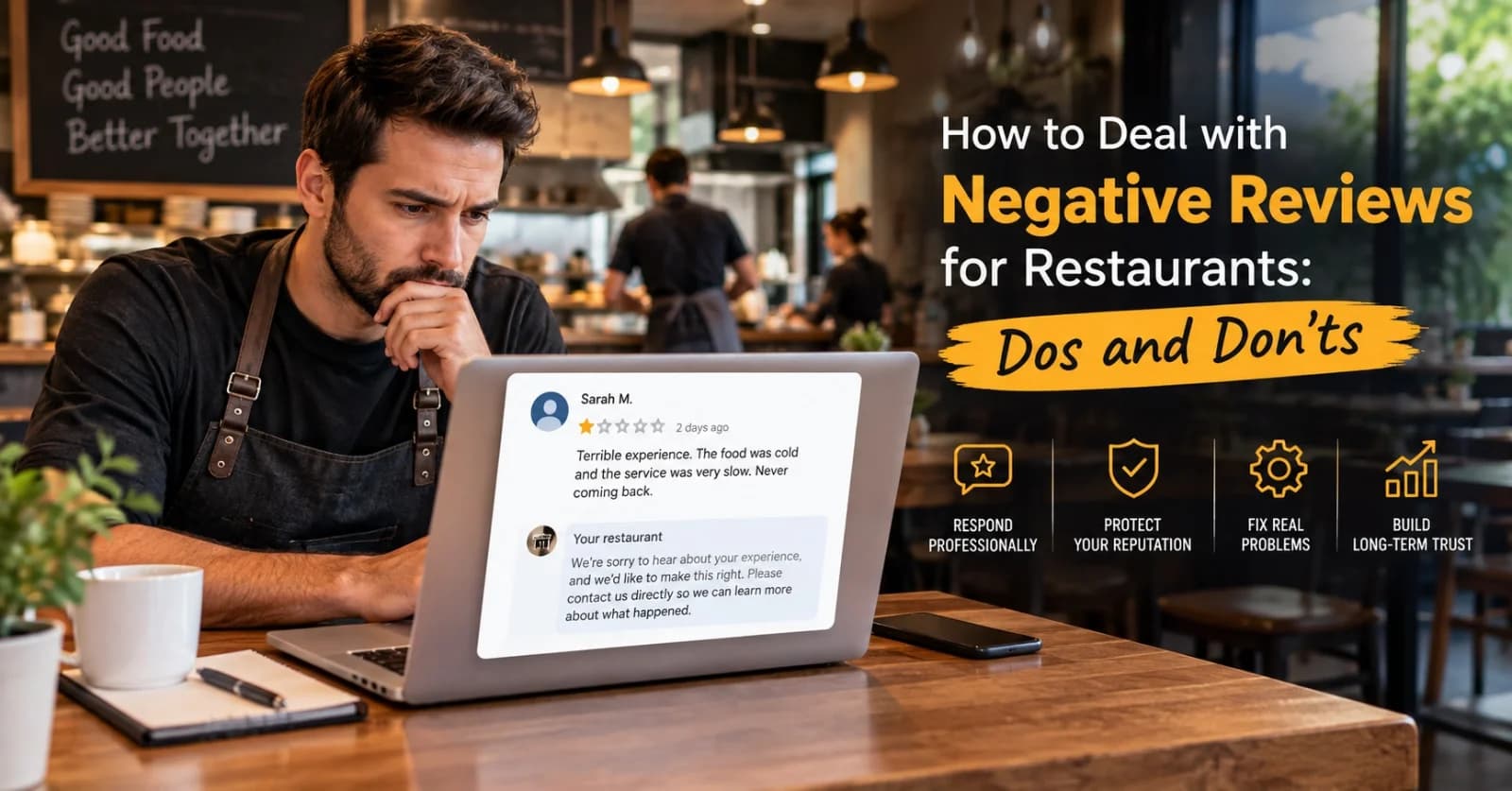
How to Handle Negative Restaurant Reviews: A Practical Dos and Don'ts Guide
A bad review doesn't have to hurt your restaurant's reputation — how you respond to it does more work than the review itself. Here's a clear, practical dos-and-don'ts approach.
6 Sept 2026 · 14 min read
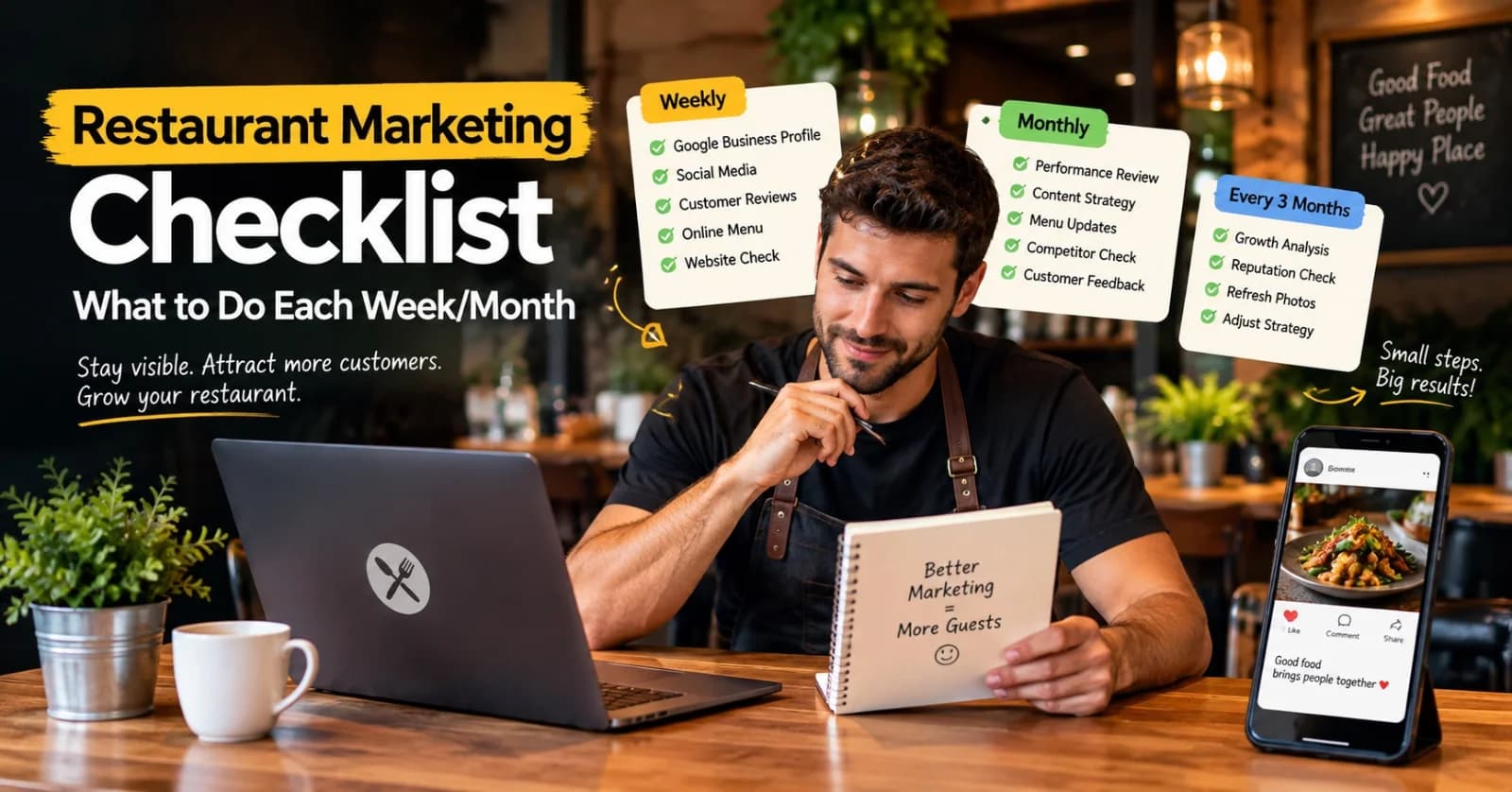
Restaurant Marketing Checklist: What to Do Every Week and Every Month
A realistic, no-burnout routine for restaurant marketing — what's worth checking weekly, reviewing monthly, and revisiting every few months, without turning it into a second job.
11 Sept 2026 · 13 min read
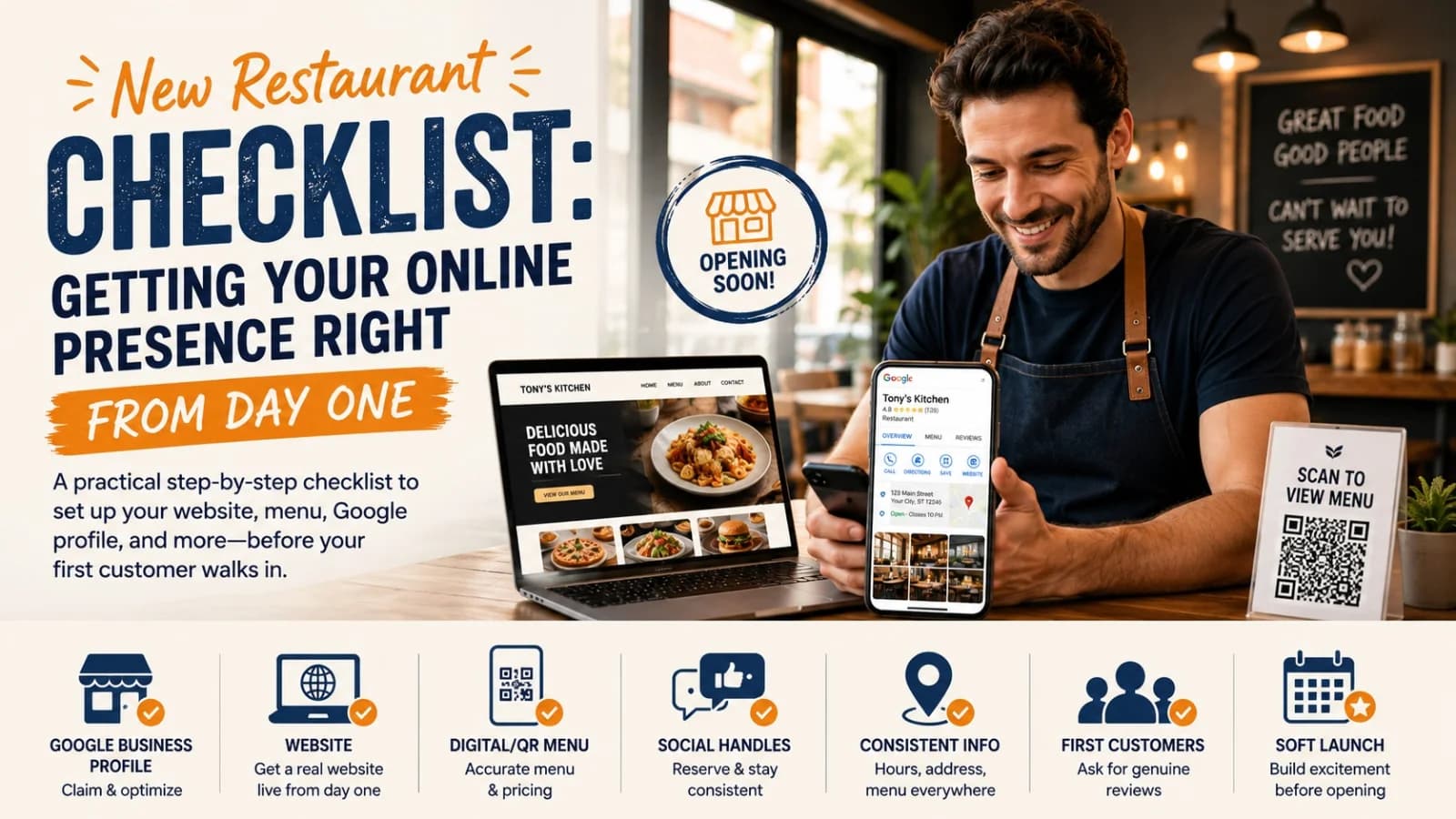
New Restaurant Checklist: Getting Your Online Presence Right From Day One
A practical, ordered checklist for getting your restaurant's website, Google profile, menu, and social presence right before, during, and after opening week — not scrambled together at the last minute.
3 Sept 2026 · 12 min read
About Menuberg
Menuberg helps restaurants create professional websites and digital storefronts without complicated setup. Learn more.