
Home → Blog → Restaurant Marketing → Restaurant Marketing on a Small Budget: 15 Strategies
Restaurant Marketing on a Small Budget: 15 Strategies
You don't need a huge advertising budget to market a small restaurant. Learn practical, low-cost restaurant marketing strategies that help you get discovered, attract local customers, build trust, and bring customers back.
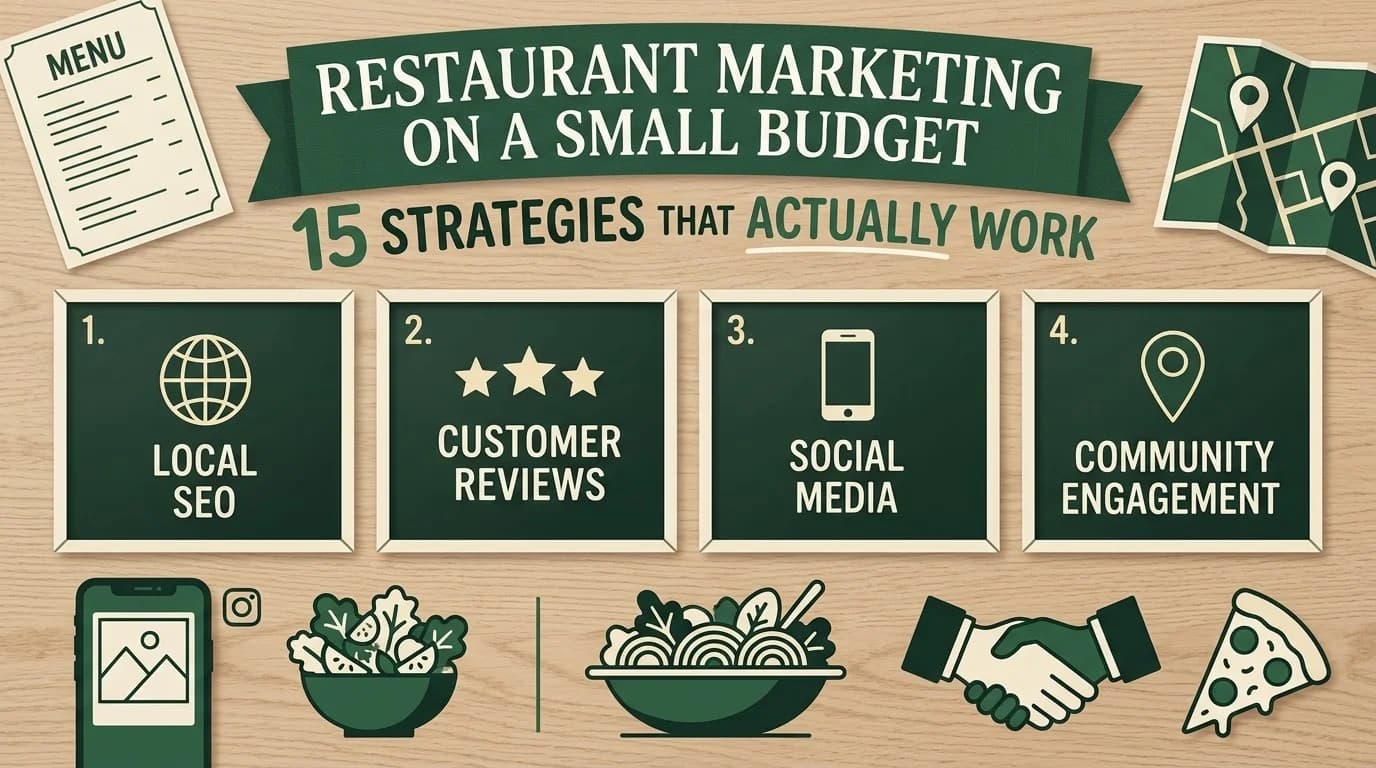
Restaurant Marketing on a Small Budget: 15 Strategies That Actually Work
You don't need a huge marketing budget to get people into your restaurant.
You need to be visible in the right places, give people a reason to choose you, and make it easy for them to come back.
That's where many small restaurants get marketing wrong.
They see a large restaurant spending thousands on advertising and assume:
"We can't compete with that."
You probably shouldn't try to compete with them on their terms.
A small restaurant has something large chains often struggle to create:
Local connection.
You know your neighborhood.
You know your customers.
You know your food.
And you can make decisions quickly.
The best low-budget restaurant marketing strategy isn't about doing everything.
It's about doing a few things consistently.
Recent restaurant-marketing guidance repeatedly points toward the same fundamentals: local search, reviews, social content, websites, email or customer retention, local partnerships, and measurable campaigns.
Here are 15 practical strategies you can start using without needing a massive marketing budget.
1. Start With Google Business Profile
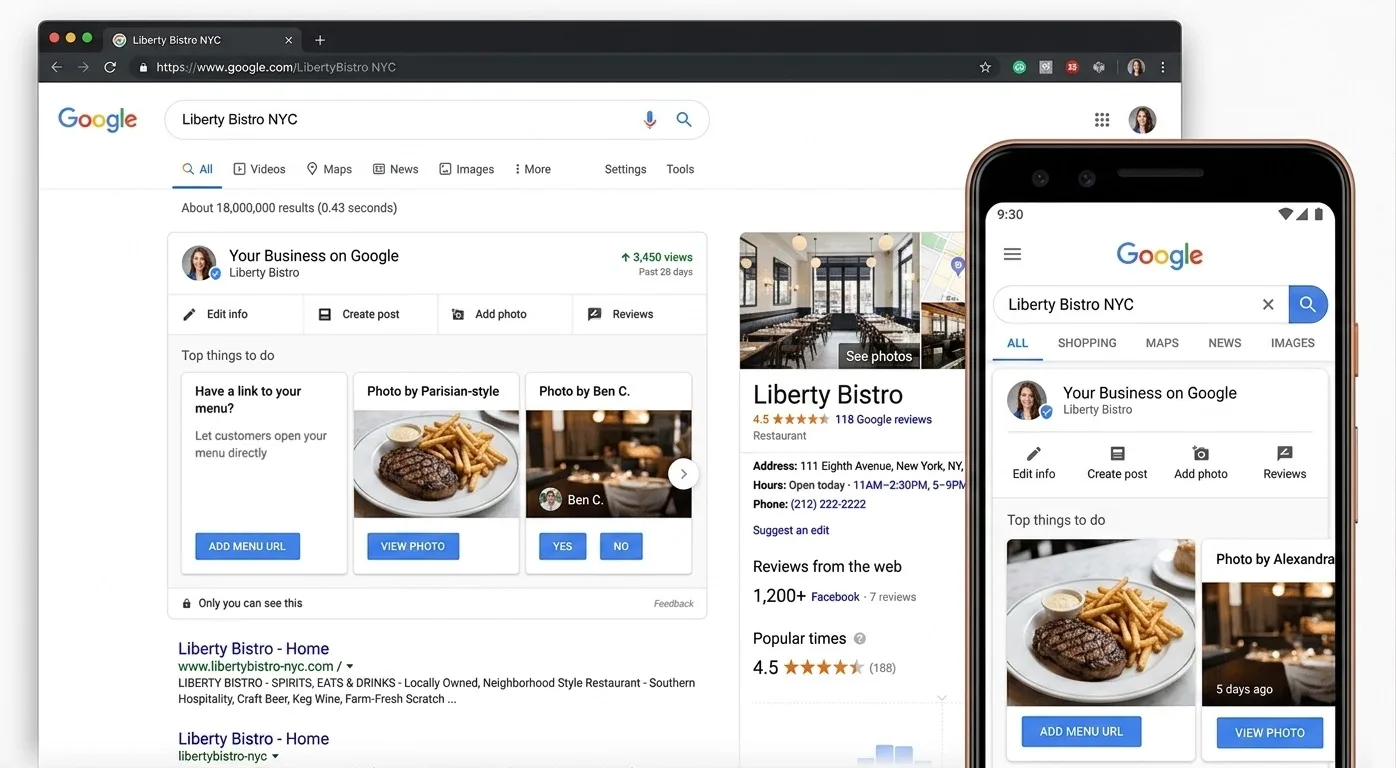
Before spending money on advertisements, make sure people can actually find your restaurant.
A Google Business Profile can put your restaurant in front of people searching on Google and Maps.
Think about searches such as:
"restaurant near me"
"pizza near me"
"best burger restaurant in [area]"
"Indian restaurant near me"
These aren't random visitors.
They're people actively looking for somewhere to eat.
Make sure your profile has:
- Correct restaurant name
- Accurate address
- Opening hours
- Phone number
- Website
- Menu
- Good food photos
- Restaurant category
- Accurate location
- Genuine customer reviews
This costs nothing to set up.
And it should be one of the first things a small restaurant gets right.
For more detail, read our guide to Google Business Profile for Restaurants
2. Get Genuine Google Reviews
Imagine two restaurants are next to each other.
Restaurant A:
4.7 stars — 386 reviews
Restaurant B:
3.9 stars — 42 reviews
Which one feels safer to try?
Reviews provide social proof.
They reduce uncertainty.
And Google says reviews and positive ratings can contribute to a business's prominence in local search.
But don't buy reviews.
Don't create fake accounts.
Don't ask friends who never visited your restaurant to review you.
Instead, ask real customers.
After a genuinely good experience, a simple request can work:
"If you enjoyed your meal, we'd really appreciate an honest Google review."
Then respond to the reviews you receive.
A positive review isn't just a compliment.
It's also an opportunity to show potential customers how your restaurant treats people.
3. Make Your Restaurant Website Your Online Home
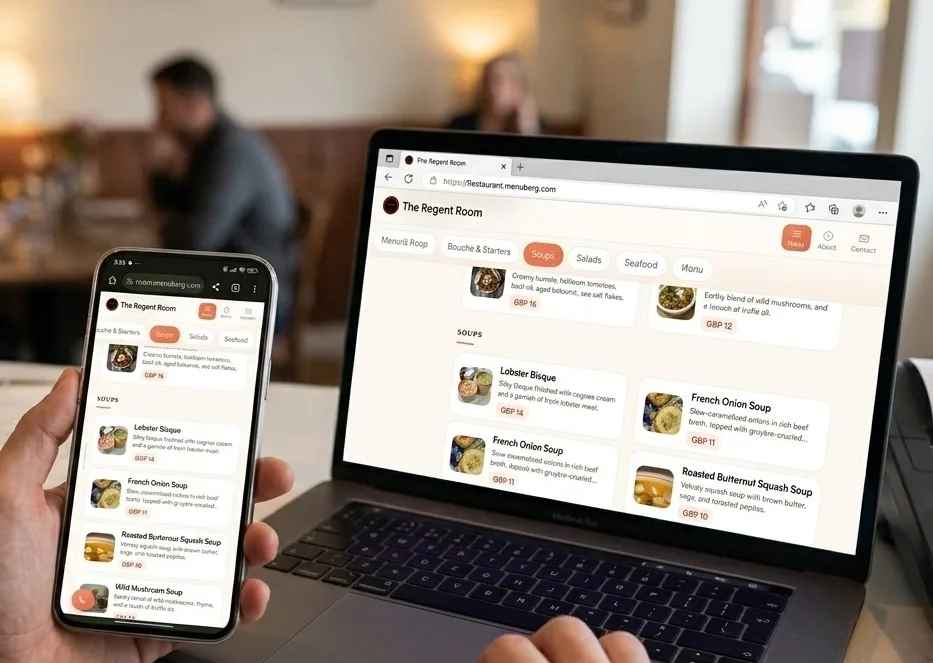
You don't necessarily need an expensive custom website.
But having a place online that you control can be extremely valuable.
Your restaurant website can provide:
- Menu
- About
- Contact
- Location
- Opening hours
- Food photographs
- Restaurant information
- A clear way to contact you
It can also connect your Google presence and social media together.
For example:
Google → Website → Menu
or:
Instagram → Website → Menu
A simple website can be enough.
With a platform such as Menuberg, a small restaurant can create a dedicated website without hiring a developer or maintaining a technical team.
A restaurant can use a subdomain such as restaurant.menuberg.com
and manage its menu and website itself.
For a small restaurant, removing technical complexity is important.
Your time should be spent running the restaurant—not fixing a website.
You can create your website without hiring a developer for less than the price of a burger each month.
4. Stop Trying to Go Viral
This might be one of the most important pieces of advice in this entire article.
You don't need to go viral.
You need customers.
A video viewed by 500,000 people around the world may generate less business than a video viewed by 5,000 people who live within a few kilometers of your restaurant.
Don't obsess over:
- Follower count
- Likes
- Views
- Viral sounds
Instead ask:
Are people near my restaurant seeing this?
A small restaurant should prioritize relevant attention over enormous attention.
A local customer who sees your food 10 times may be far more valuable than someone 500 miles away who watches one viral video.
5. Turn Your Phone Into a Marketing Camera
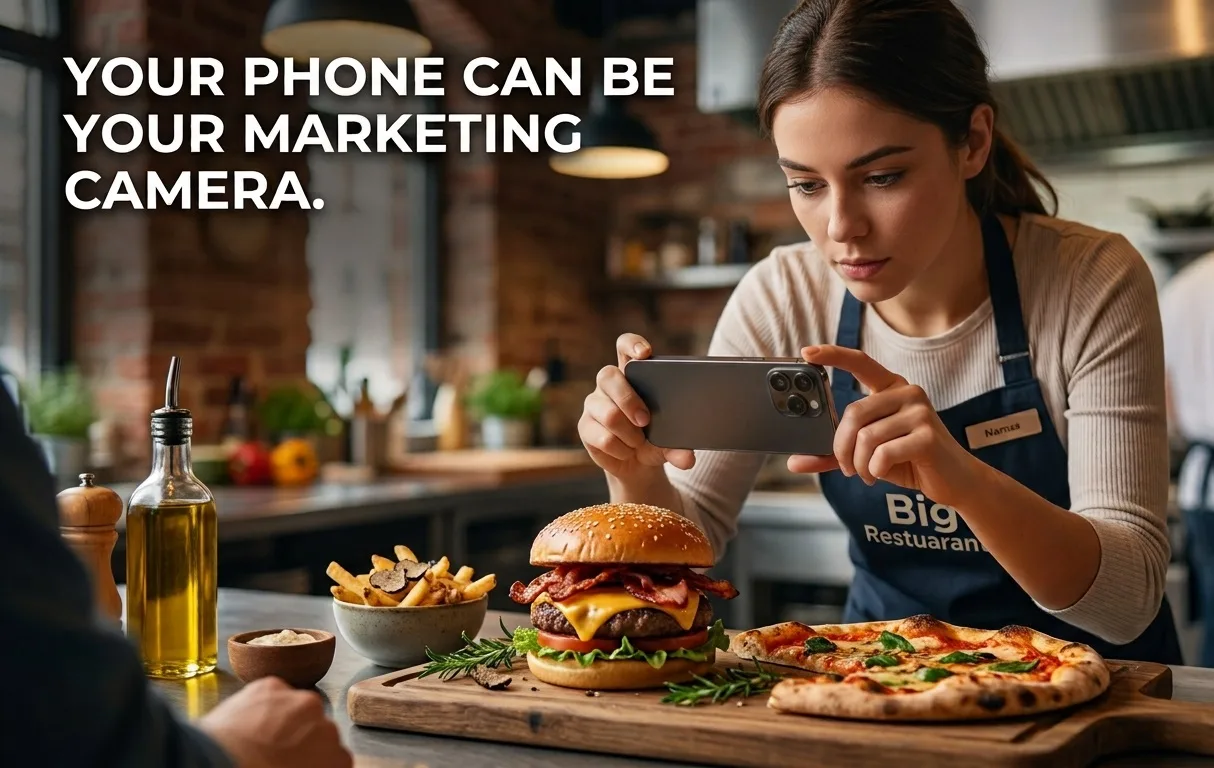
You don't need a $3,000 camera to create restaurant content.
Your phone is enough to start.
Film:
- Food being prepared
- A burger being assembled
- Pizza coming out of the oven
- Sauce being poured
- A steak being cut
- Fresh ingredients arriving
- Staff preparing the restaurant
- Customers enjoying the atmosphere—with permission
- Behind-the-scenes moments
Short, authentic videos can be particularly useful for social content.
And you don't need every video to look like a television commercial.
Sometimes the most interesting restaurant content is simply:
"Here's how we make our most popular burger."
You already have the content.
You're selling food.
Your job is to show it.
6. Create One Signature Item
What is the one thing people should remember about your restaurant?
Maybe it's:
The giant burger.
Or:
The extra-spicy wings.
Or:
The family biryani platter.
Or:
The homemade cheesecake.
Give people something memorable.
A restaurant with 40 dishes but nothing memorable can be harder to talk about than a restaurant with one dish everyone remembers.
This doesn't mean you need to invent a ridiculous food challenge.
It means you should identify what makes your restaurant worth remembering.
Then build some of your content around it.
7. Use Your Existing Customers as Your Marketing Team
Word of mouth is one of the oldest forms of restaurant marketing.
And it's still valuable.
But you can't simply say:
"Please tell everyone about us."
Give customers something worth talking about.
That might be:
- A signature dish
- Exceptional presentation
- A memorable dessert
- Friendly service
- A unique atmosphere
- A clever packaging idea
- A surprising portion
- A genuinely good experience
Then make sharing easy.
A customer who loves your food might naturally photograph it and post it.
That's marketing you didn't have to buy.
The key is to create something people want to talk about, rather than trying to manufacture fake word of mouth.
8. Partner With Nearby Businesses
Look around your neighborhood.
Who already has the customers you want?
Maybe:
- Gyms
- Offices
- Hotels
- Salons
- Universities
- Cafes
- Shops
- Event venues
- Local businesses
You don't necessarily need to pay them.
Create a mutually useful partnership.
For example:
Gym + Restaurant
The gym gives members a restaurant discount.
The restaurant promotes the gym to its health-conscious customers.
Or:
Office + Restaurant
Create a simple lunch offer for nearby employees.
Or:
Hotel + Restaurant
Provide guests with a nearby dining recommendation.
Small partnerships can put your restaurant in front of people who are already nearby.
And nearby customers are exactly the people a local restaurant needs.
9. Run a Simple Referral Offer
Your existing customers already know people.
Give them a reason to bring someone new.
For example:
Bring a friend who hasn't visited us before and both receive a free drink.
Or:
Refer a new customer and receive 10% off your next visit.
Keep the economics simple.
Don't give away a $20 meal to acquire a customer who might spend $12.
Calculate the numbers first.
A promotion is only useful if the customer value it generates makes financial sense.
10. Build an Email or Customer List
Social media followers are useful.
But you don't control the platform.
A customer list is different.
With appropriate customer consent, you can build a direct communication channel for:
- New menu items
- Special events
- Seasonal promotions
- Birthday offers
- Loyalty rewards
- Restaurant announcements
You don't need to send emails every day.
In fact, you probably shouldn't.
A useful message once in a while is better than constantly sending promotions that customers eventually ignore.
The goal isn't:
"Send more messages."
The goal is:
"Stay useful and memorable."
11. Create Offers for Slow Days
Every restaurant has quieter periods.
Maybe Monday is slow.
Maybe Tuesday afternoon is slow.
Don't automatically discount everything.
Instead, create offers around the specific period you're trying to improve.
For example:
Tuesday Lunch Special
or:
Monday Family Meal
or:
Wednesday Student Offer
This is much more strategic than permanently lowering your prices.
You're using marketing to address a specific business problem.
And be careful with discounts.
A discount that brings in customers but destroys your margin isn't necessarily good marketing.
12. Use Local Social Media Content
Don't just post:
"Come visit us!"
every day.
That's advertising.
Give people something interesting.
For example:
Post idea 1
"How spicy is our hottest chicken?"
Post idea 2
"Which burger should we bring back?"
Post idea 3
"Behind the scenes: preparing today's fresh dough."
Post idea 4
"Guess how many wings are in this platter."
Post idea 5
"Our chef's favorite dish isn't what you think."
The objective is to create interaction.
And when posting local content, make the location obvious.
Use your restaurant's location where appropriate.
Mention the neighborhood.
Show the actual restaurant.
You're not trying to entertain the entire internet.
You're trying to become familiar to people who could actually visit you.
13. Work With Small Local Creators
You don't necessarily need a celebrity food influencer.
A local creator with a smaller audience may be more relevant.
Look for people whose audience is actually located near your restaurant.
For example:
10,000 local followers
can potentially be more valuable to you than:
500,000 followers spread across the world.
Recent marketing discussions around smaller creators emphasize the value of niche communities and engagement rather than simply chasing enormous follower counts.
But don't judge creators only by follower count.
Look at:
- Where their audience lives
- Engagement quality
- Previous restaurant collaborations
- Content quality
- Audience relevance
And be clear about whether a post is sponsored or compensated.
14. Use QR Codes Beyond the Menu
Most restaurants think:
QR code = menu.
It can be more useful than that.
You can use QR codes to send customers to:
- Digital menu
- Review page
- Website
- Loyalty signup
- Special offer
- Event information
- Social media
- Feedback form
For example, after a good meal:
"Enjoyed your visit? Tell us what you think."
Then provide a QR code.
Or on takeaway packaging:
"See today's menu."
A QR code turns physical marketing into digital traffic.
For a small restaurant, that bridge can be surprisingly useful.
15. Measure What Actually Works
This is the strategy most small businesses skip.
They post.
They run promotions.
They print flyers.
They pay an influencer.
Then they ask:
"Did marketing work?"
But they don't know.
You need to track the source whenever possible.
For example:
Instagram offer
vs.
Google discovery
vs.
Referral
vs.
Local partnership
vs.
QR code
Use different promotional codes, links, landing pages, or simple customer questions where practical.
If one campaign produces 30 customers and another produces zero, you now have information.
Marketing becomes much easier when you're not guessing.
What About Paid Advertising?
Paid advertising isn't automatically bad.
But if your budget is small, don't start by throwing money at every platform.
First fix the free foundations.
Make sure you have:
- A good Google Business Profile
- Accurate information
- Strong photographs
- A useful website
- A good menu
- Genuine reviews
- Active social content
Then test paid advertising with a small, controlled budget.
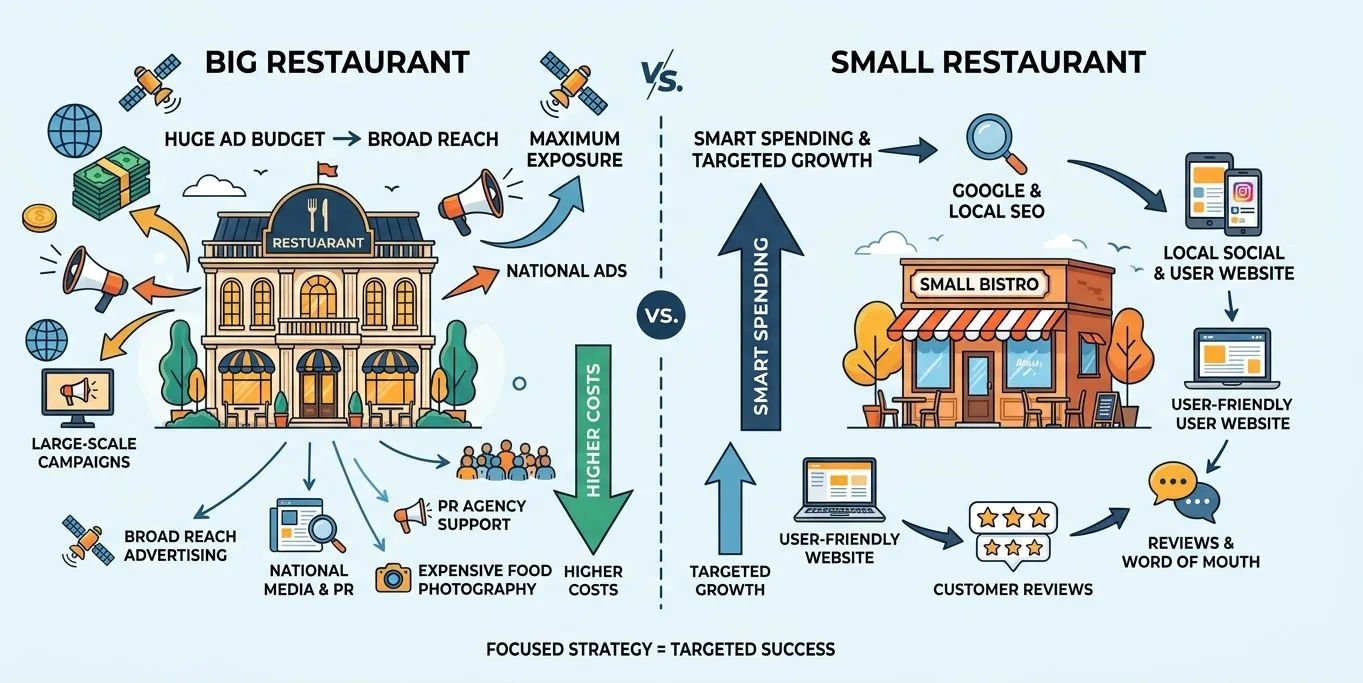
For a local restaurant, broad advertising can waste money because people hundreds of miles away aren't useful customers.
A tightly targeted local campaign can make more sense.
But don't assume every paid campaign will work.
Test → measure → improve → scale.
That's much safer than:
Spend → hope → spend more.
The Biggest Marketing Mistake Small Restaurants Make
It's not having a small budget.
It's trying to do everything at once.
They create:
- TikTok
- YouTube
- Google Ads
- Facebook Ads
- Influencer campaigns
- Flyers
- Discounts
- Loyalty programs
Then they maintain none of them properly.
Don't do that.
Choose a small number of channels.
For example:
Foundation
Google Business Profile + Website
Attention
Instagram/TikTok
Retention
Reviews + customer list
Local growth
Partnerships + referrals
That's already enough to build a serious marketing system.
A $0 Restaurant Marketing Plan
If you literally have no marketing budget, start here.
Week 1
Create or optimize your Google Business Profile.
Add your restaurant information.
Upload good photographs.
Make sure your menu is available.
Ask happy customers for genuine reviews.
Week 2
Create your restaurant website.
Make sure the menu, About, Contact, location, and opening hours are easy to find.
Connect your social profiles.
Week 3
Start creating short food videos.
Don't worry about perfection.
Post consistently.
Show your food.
Show your restaurant.
Show your people.
Week 4
Contact five nearby businesses.
Offer a simple partnership.
Ask customers for referrals.
Look at what content received attention.
Then repeat what worked.
That's already a real marketing strategy.
A $100 Restaurant Marketing Plan
If you have a small amount of money to spend, don't automatically spend all of it on ads.
You could divide a test budget between:
Content
Better food photography or simple video creation.
Local promotion
A small, tightly targeted campaign.
Customer incentive
A carefully calculated referral or slow-day offer.
Local creator
One relevant local creator rather than several random influencers.
Then measure the results.
Your exact allocation should depend on your restaurant, location, margins, and goals.
There isn't a magic percentage that works for every restaurant.
Marketing Doesn't Fix Bad Food
This needs to be said.
Marketing can get people through the door.
It can't guarantee that they'll return.
If your food is inconsistent, service is poor, or the restaurant experience disappoints customers, more marketing may simply create more one-time customers.
The strongest marketing system has a loop:
Marketing
↓
First visit
↓
Good experience
↓
Review
↓
Recommendation
↓
Repeat visit
↓
More customers
That's why restaurant marketing shouldn't be separated completely from restaurant operations.
Your best marketing asset is still:
A customer who genuinely wants to come back.
Don't Compete With Big Restaurants on Their Budget
A large chain may have:
- Professional marketing teams
- Huge advertising budgets
- Celebrity partnerships
- Television campaigns
- Large production teams
You probably don't.
That's okay.
Your advantage is different.
You can be:
Faster.
More personal.
More local.
More authentic.
You can film today's special with your phone.
You can respond personally to a customer.
You can partner with the business next door.
You can change your menu immediately.
You can create a promotion for tomorrow.
You can know your regular customers by name.
That's an advantage.
Use it.
The Small Restaurant Marketing Formula
If you remember nothing else from this article, remember this:
Get discovered.
Use Google and local search.
↓
Build trust.
Use reviews, photographs, and a professional online presence.
↓
Create desire.
Use food photography, video, stories, and compelling offers.
↓
Make the decision easy.
Keep your website and menu simple and accessible.
↓
Give customers a reason to return.
Use good service, loyalty, offers, and direct communication.
↓
Turn happy customers into advocates.
Encourage genuine reviews and word of mouth.
That's marketing.
Not simply posting an Instagram picture every morning.
Final Thoughts
You don't need thousands of dollars to start marketing your restaurant.
You need to stop thinking of marketing as one giant expense.
Marketing is a collection of small actions.
A better Google profile.
A good photograph.
A useful website.
A genuine review.
A local partnership.
A memorable dish.
A short video.
A referral.
A customer who comes back.
Each one might look small.
Together, they create something much bigger:
A restaurant people can discover, trust, remember, and return to.
Start small.
Do the basics extremely well.
Measure what works.
Then spend money only where you've already found evidence that it can produce a return.
Because when your marketing budget is limited, the goal isn't to spend more.
It's to waste less.
Ready to build your restaurant's online presence?
Menuberg helps restaurants launch a professional website and QR digital menu in minutes — no coding required.
Create Your Restaurant WebsiteRelated Articles
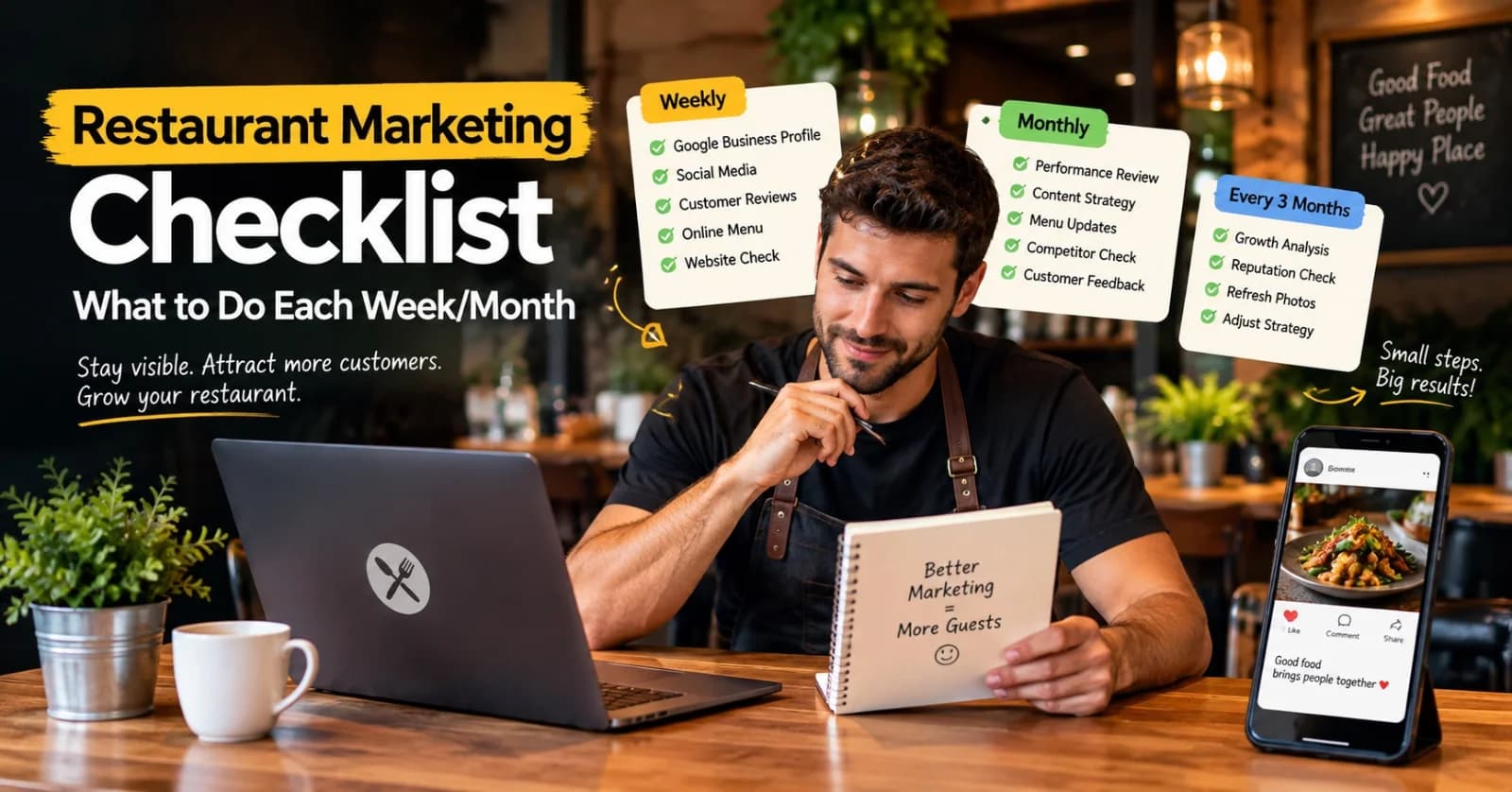
Restaurant Marketing Checklist: What to Do Every Week and Every Month
A realistic, no-burnout routine for restaurant marketing — what's worth checking weekly, reviewing monthly, and revisiting every few months, without turning it into a second job.
11 Sept 2026 · 13 min read
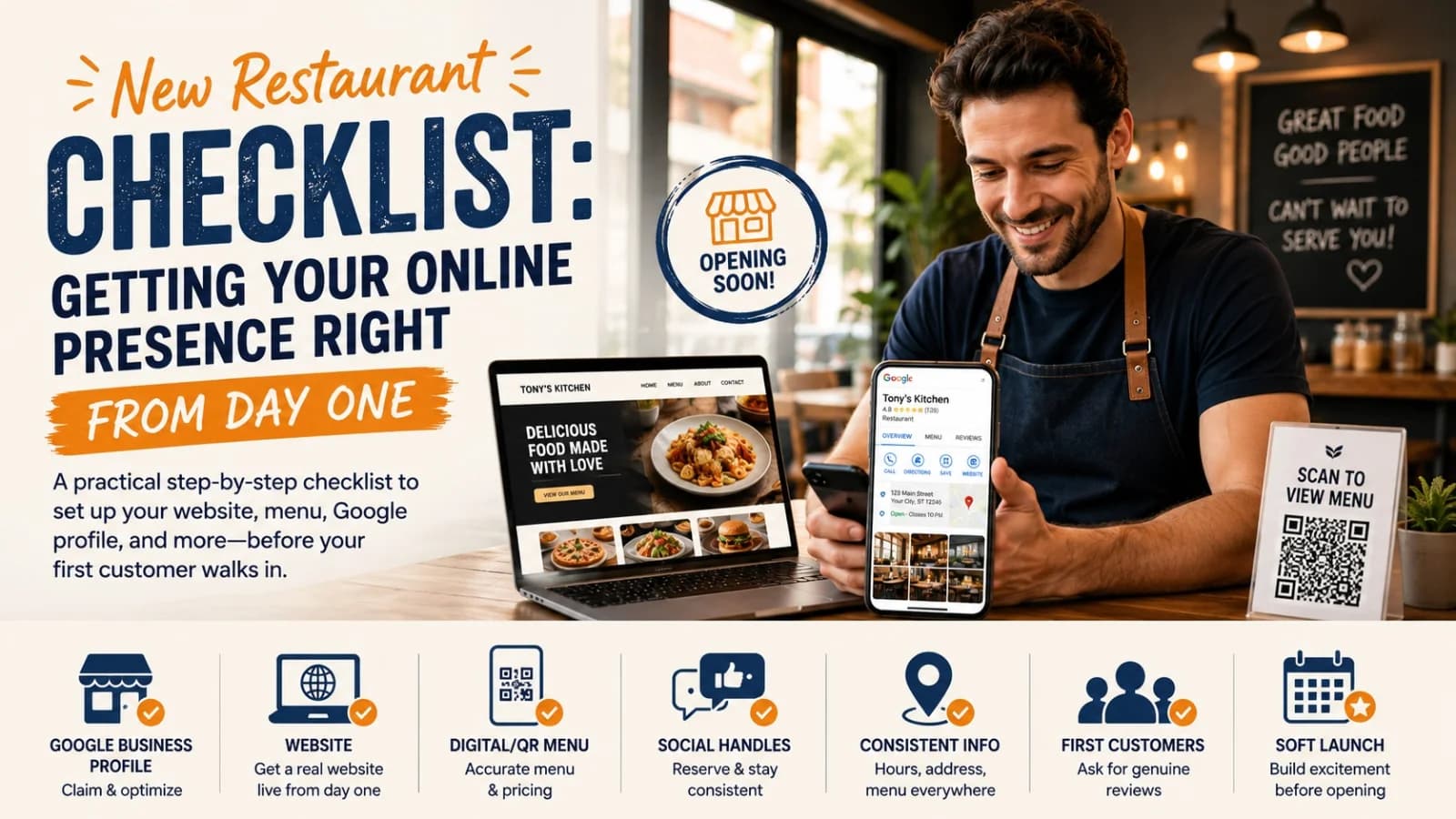
New Restaurant Checklist: Getting Your Online Presence Right From Day One
A practical, ordered checklist for getting your restaurant's website, Google profile, menu, and social presence right before, during, and after opening week — not scrambled together at the last minute.
3 Sept 2026 · 12 min read
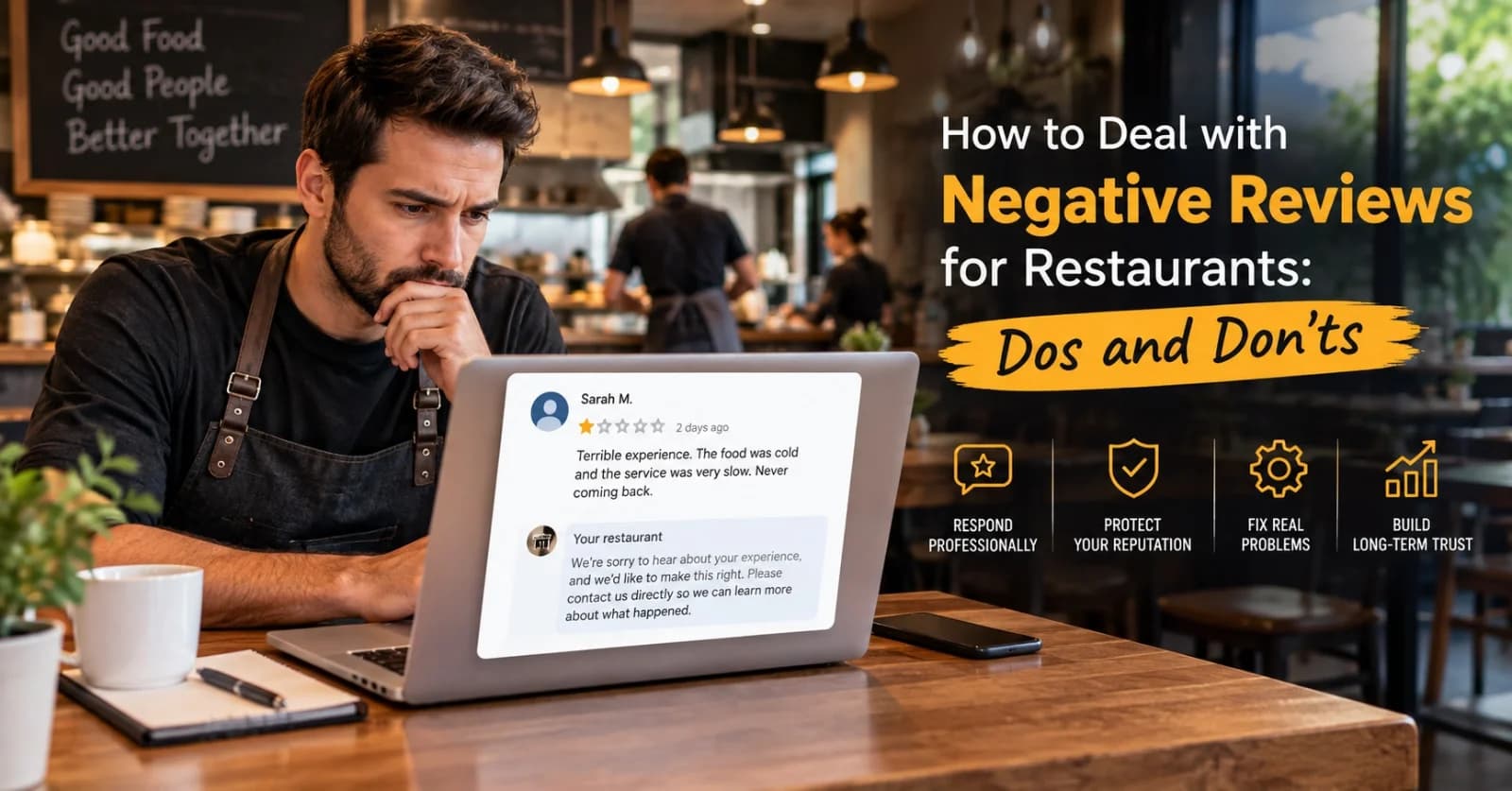
How to Handle Negative Restaurant Reviews: A Practical Dos and Don'ts Guide
A bad review doesn't have to hurt your restaurant's reputation — how you respond to it does more work than the review itself. Here's a clear, practical dos-and-don'ts approach.
6 Sept 2026 · 14 min read
About Menuberg
Menuberg helps restaurants create professional websites and digital storefronts without complicated setup. Learn more.