
Home → Blog → Restaurant Marketing → How to Rank Higher for “Restaurants Near Me” Searches
How to Rank Higher for “Restaurants Near Me” Searches
Want more customers to discover your restaurant when they search “restaurants near me”? Learn the practical local SEO steps that can improve your visibility on Google Search and Maps.
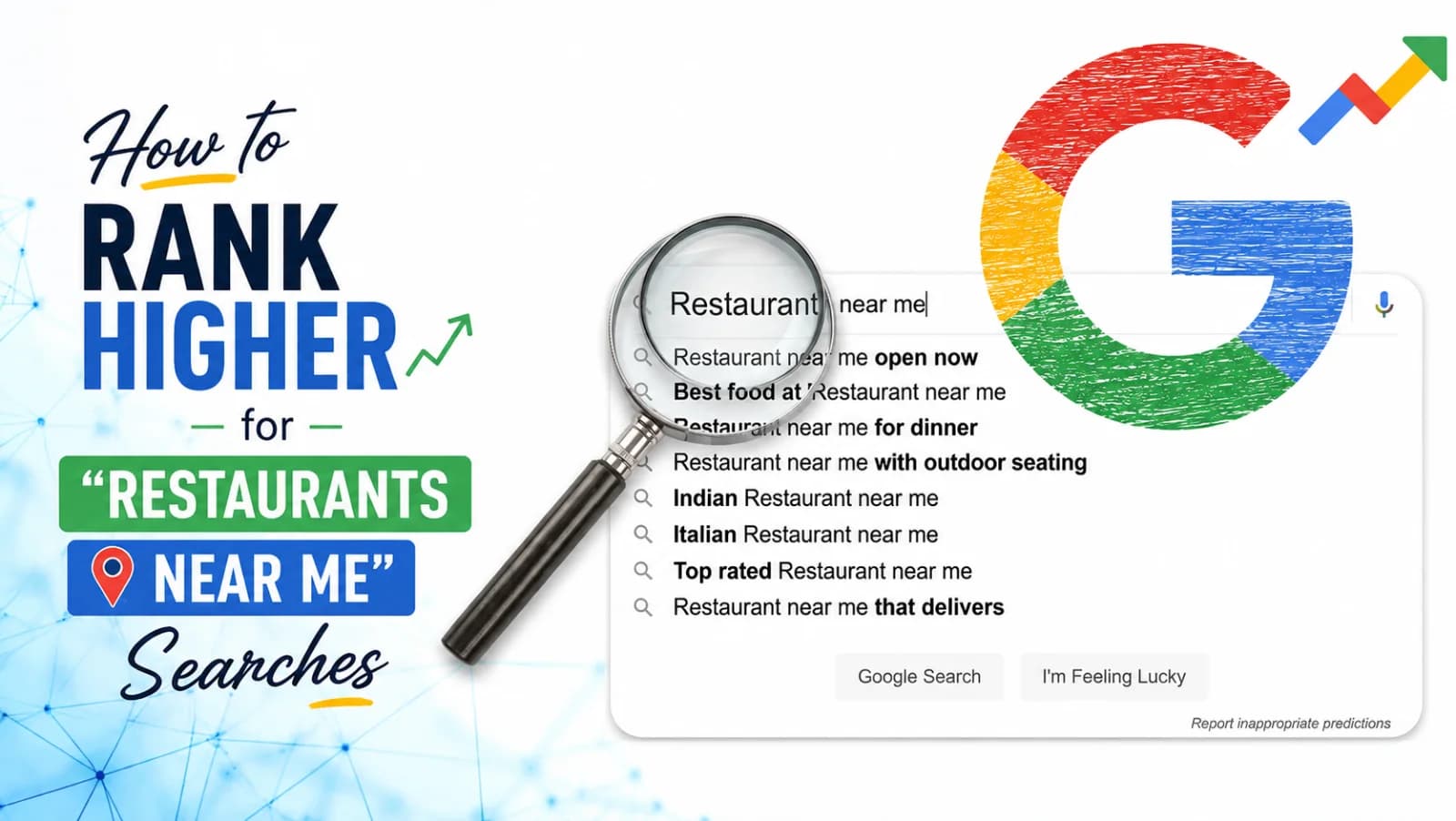
How to Rank Higher for “Restaurants Near Me” Searches
Imagine someone is hungry and pulls out their phone.
They search:
restaurants near me
Google shows a map and several nearby restaurants.
Your restaurant might be only five minutes away. Your food might be excellent. Your prices might be better.
But if your restaurant doesn't appear among the options, the customer may never know you exist.
That's what makes "near me" searches so valuable for restaurants.
These searches often come from people who are already looking for somewhere to eat. They're not necessarily researching restaurants for next month. They may be trying to decide where to go right now.
So how do you improve your chances of appearing?
The answer isn't stuffing "near me" across your website.
Google's local results are primarily influenced by relevance, distance, and prominence.
You can't control all three.
But you can make your restaurant easier for Google to understand and easier for customers to trust.
That's where your work should focus.
1. Claim and Verify Your Google Business Profile
Start with your Google Business Profile.
If you haven't claimed and verified it, make that a priority.
Your profile can show customers important information directly in Google Search and Maps, including:
- Restaurant name
- Category
- Address
- Phone number
- Opening hours
- Website
- Menu
- Photos
- Reviews
Your Business Profile is more than a listing.
Think of it as your restaurant's front door on Google.
For many customers, it may be the first thing they see before they ever visit your website.
2. Choose the Right Restaurant Category
Your primary category helps Google understand what your restaurant actually is.
If you're a sushi restaurant, your category should accurately represent that.
If you're a bakery, choose a category that reflects the bakery.
Don't choose unrelated categories simply because you want to appear for more searches.
The objective isn't to tell Google that you do everything.
It's to make your restaurant's identity clear.
Accuracy is more useful than trying to be clever.
3. Complete Your Business Information
A customer searching for a restaurant nearby wants answers quickly.
Where are you?
Are you open?
What kind of food do you serve?
What's on the menu?
Can I contact you?
Make those answers easy to find.
Keep your:
- Address
- Phone number
- Opening hours
- Website
- Menu
- Restaurant category
accurate and up to date.
An incomplete profile creates uncertainty.
A complete profile gives both Google and customers more useful information about your restaurant.
4. Don't Try to Trick Google With “Near Me”
This is important.
You do not need to write:
Best restaurant near me
Best restaurant near me
Restaurant near me
Restaurants near me
all over your website.
Google already understands that "near me" represents a location-based search.
Instead, clearly communicate your real location.
For example:
We serve authentic Italian food from our restaurant in Downtown Austin.
That's useful to both customers and search engines.
Write naturally.
5. Make Your Location Clear on Your Website
Your restaurant website should clearly tell people where you are.
Include your:
- Full address
- City
- Neighborhood, when useful
- Phone number
- Opening hours
- Location information
Don't make customers hunt for your address.
Your Contact page should make your location obvious.
Your homepage can mention the city or neighborhood naturally when appropriate.
Your website gives you another place to clearly explain what your restaurant is and where customers can find it.
6. Put Your Menu Online
Someone searching for a nearby restaurant usually wants to know more than the name.
They want to know:
"Do I actually want to eat there?"
Your menu can answer that question.
Make it easy to find.
Keep dishes and prices current.
Use clear categories.
Write useful descriptions.
And make sure the menu works properly on mobile.
A beautiful restaurant website isn't very useful if a customer has to download a giant PDF, zoom in, and scroll sideways just to see the prices.
Menuberg lets small restaurants create and manage a mobile-friendly website without hiring a developer, with built-in QR menu support and simple menu management.
Your menu should reduce uncertainty, not create more of it.
7. Get Genuine Reviews
Reviews are one of the strongest trust signals customers see when choosing between nearby restaurants.
Think about your own behavior.
If you see:
Restaurant A
4.7 stars — 1,200 reviews
Restaurant B
3.2 stars — 18 reviews
Which one are you more likely to investigate?
Reviews influence customers, and they can also contribute to how prominent a business appears in local search.
But don't buy reviews.
Don't create fake accounts.
Don't manufacture five-star ratings.
Instead, ask genuine customers for honest feedback.
After a good experience, something as simple as:
"If you enjoyed your meal, we'd really appreciate an honest Google review."
can be enough.
And when customers leave reviews, respond to them.
You're not only talking to the person who wrote the review.
You're also showing future customers that you pay attention.
8. Add High-Quality Photos
Restaurants have one major advantage in local search:
People want to see the food.
Add current photographs of things such as:
- Signature dishes
- Popular dishes
- Restaurant interior
- Exterior
- Dining area
- Atmosphere
- Food preparation
Don't upload dozens of nearly identical pictures just to increase the number.
Show customers what visiting your restaurant actually looks like.
A hungry customer comparing three nearby restaurants may spend only seconds looking at each listing.
Your photos are part of that first impression.
9. Keep Your Opening Hours Accurate
Consider this search:
restaurants near me open now
Your restaurant appears.
The customer checks your hours.
Google says you're open.
They drive there.
You're closed.
That's a terrible customer experience.
Keep your regular hours updated and remember to update special holiday or temporary hours.
For restaurants, this is particularly important because operating hours can change frequently.
Your customers shouldn't have to call you just to find out whether you're open.
10. Keep Your Business Information Consistent
Your restaurant may appear on:
- Your website
- Social media
- Local directories
- Review websites
- Food platforms
- Local publications
Try to keep the important information consistent.
Your restaurant name should be recognizable.
Your address should be correct.
Your phone number should be current.
Your website should point to the right place.
Your opening hours should be maintained.
You don't need to obsess over tiny formatting differences.
Just make sure customers and search engines aren't being given conflicting information.
11. Build Real Local Prominence
Your restaurant's online reputation doesn't exist only on Google.
Your restaurant may be mentioned by:
- A local food blogger
- A city magazine
- A local newspaper
- A community website
- A neighborhood organization
- A legitimate local directory
A genuine mention from a relevant local website can be valuable.
Don't chase hundreds of meaningless backlinks.
A real mention from a respected local website can be far more useful than a pile of low-quality links.
Think:
Become known locally.
Not:
Collect as many links as possible.
12. Make Your Website Mobile-Friendly
"Restaurants near me" is naturally a mobile-oriented search.
People are often searching while:
- Walking around
- Sitting in a car
- Traveling
- Deciding where to have dinner
- Looking for somewhere nearby
Your website needs to work properly on a phone.
A customer should be able to quickly:
- Open your menu
- Find your address
- Call you
- See your hours
- Find directions
- Understand what you serve
Buttons should be easy to tap.
Text should be readable.
Pages shouldn't take forever to load.
If the website creates friction, the customer can simply go back to Google and choose another restaurant.
13. Give Customers an Obvious Next Step
Getting discovered is only half the job.
Once someone reaches your website, what should they do?
Make the next step obvious.
Depending on your restaurant, that could be:
View Menu
Call
Get Directions
Visit
Contact Us
A clear call-to-action is especially useful on mobile.
Someone searching for a restaurant nearby may be ready to make a decision within minutes.
Don't make them figure out how.
14. Create Useful Local Content
Your restaurant website can do more than display your menu.
Useful content can help you reach people earlier in the decision-making process.
For example, a Mexican restaurant could publish:
- What to order at a Mexican restaurant for the first time
- Different types of tacos explained
- Mild Mexican dishes for people who don't like spicy food
- Traditional Mexican ingredients explained
Local content can also make sense when you genuinely have something useful to say about your area.
For example:
A guide to choosing a restaurant for a family dinner in [Neighborhood]
But don't create dozens of nearly identical pages such as:
Best restaurant in Neighborhood A
Best restaurant in Neighborhood B
Best restaurant in Neighborhood C
if you don't actually have useful information for those searches.
Useful content is better than location-page spam.
15. Track What People Actually Search
Don't guess what customers are searching for.
Use Google Search Console and your analytics data to find out.
Look at:
- Search queries
- Impressions
- Clicks
- Popular pages
- Traffic sources
- Mobile traffic
- Menu-page visits
You might discover that people aren't finding you through the phrase you expected.
Maybe they're searching for:
pizza near [neighborhood]
instead of:
restaurants near me
That information can help you improve your website and content around the language your customers actually use.
Can You Guarantee a #1 Position?
No.
And anyone promising a guaranteed #1 position for "restaurants near me" should make you skeptical.
Local rankings depend on several factors, including relevance, distance, and prominence.
There's also an important point:
Local results can vary depending on where the searcher is.
A restaurant may appear very prominently to someone two blocks away but much lower for someone several miles away.
That's normal.
So don't obsess over seeing your restaurant at exactly position #1 from your own phone.
Look at the bigger picture.
Are more relevant customers discovering you?
Are impressions increasing?
Are people visiting your website?
Are they viewing your menu?
Are calls and visits increasing?
Those are much more useful questions.
How Long Does It Take to Rank Higher?
There is no universal timeline.
An established restaurant with years of reviews, strong local recognition, and an established website may have an advantage over a brand-new restaurant.
A new restaurant has to build that reputation.
Don't expect a brand-new website and Business Profile to transform your local visibility overnight.
Instead, build the foundation and improve it consistently.
Keep your information accurate.
Add quality photographs.
Maintain your menu.
Earn genuine reviews.
Build local mentions.
Publish useful content.
Monitor your results.
Over time, these pieces can strengthen your local presence.
The Biggest Mistake: Trying to Rank for the Phrase Instead of the Customer
The biggest mistake restaurants make is treating "near me" as a magic keyword.
It isn't.
The customer doesn't care whether your website contains the phrase "near me" 20 times.
They care about finding a good restaurant nearby.
Google's job is to connect that customer with relevant local businesses.
Your job is to make your restaurant easy to understand and trustworthy.
That means:
Accurate Business Profile
↓
Correct restaurant category
↓
Clear location
↓
Useful website
↓
Easy-to-find menu
↓
Genuine reviews
↓
Good photos
↓
Consistent information
↓
Strong local reputation
That's the system.
Simple “Restaurants Near Me” SEO Checklist
Google Business Profile
- Claim and verify your profile
- Choose the correct category
- Add accurate address and phone number
- Keep opening hours current
- Add your website
- Add your menu
- Upload quality photos
- Ask genuine customers for reviews
- Respond to reviews
Website
- Clearly show your restaurant's location
- Mention your city or neighborhood naturally
- Make your menu easy to find
- Keep menu information current
- Make the website mobile-friendly
- Add clear calls to action
- Make contact information easy to find
Long-Term
- Build genuine local mentions
- Publish useful content
- Monitor Google Search Console
- Track website and menu activity
- Keep improving your online presence
Final Thought
You don't need to trick Google into thinking your restaurant is nearby.
If your restaurant is genuinely nearby, distance is already working in your favor.
Your job is to make everything else clear.
What kind of restaurant are you?
Where are you located?
What do you serve?
Are you open?
What do your customers think?
Can someone see your menu?
Can they easily contact you?
The goal isn't simply to rank for two words.
It's to become one of the most useful and trustworthy choices when a nearby customer is looking for exactly what your restaurant offers.
Be relevant. Be accurate. Be easy to choose.
That's a much better restaurant SEO strategy than trying to stuff "near me" into every page.
Ready to build your restaurant's online presence?
Menuberg helps restaurants launch a professional website and QR digital menu in minutes — no coding required.
Create Your Restaurant WebsiteRelated Articles
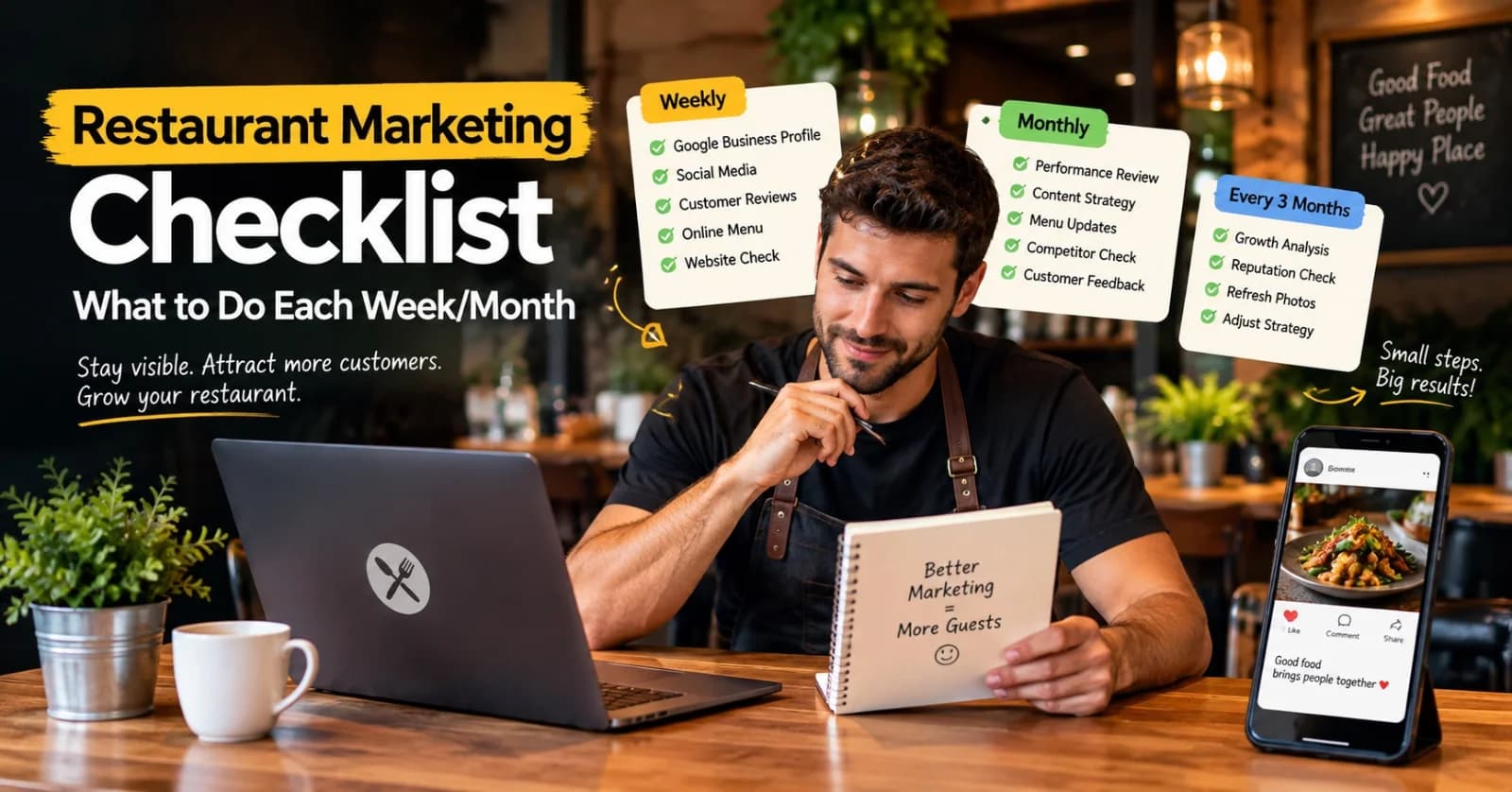
Restaurant Marketing Checklist: What to Do Every Week and Every Month
A realistic, no-burnout routine for restaurant marketing — what's worth checking weekly, reviewing monthly, and revisiting every few months, without turning it into a second job.
11 Sept 2026 · 13 min read
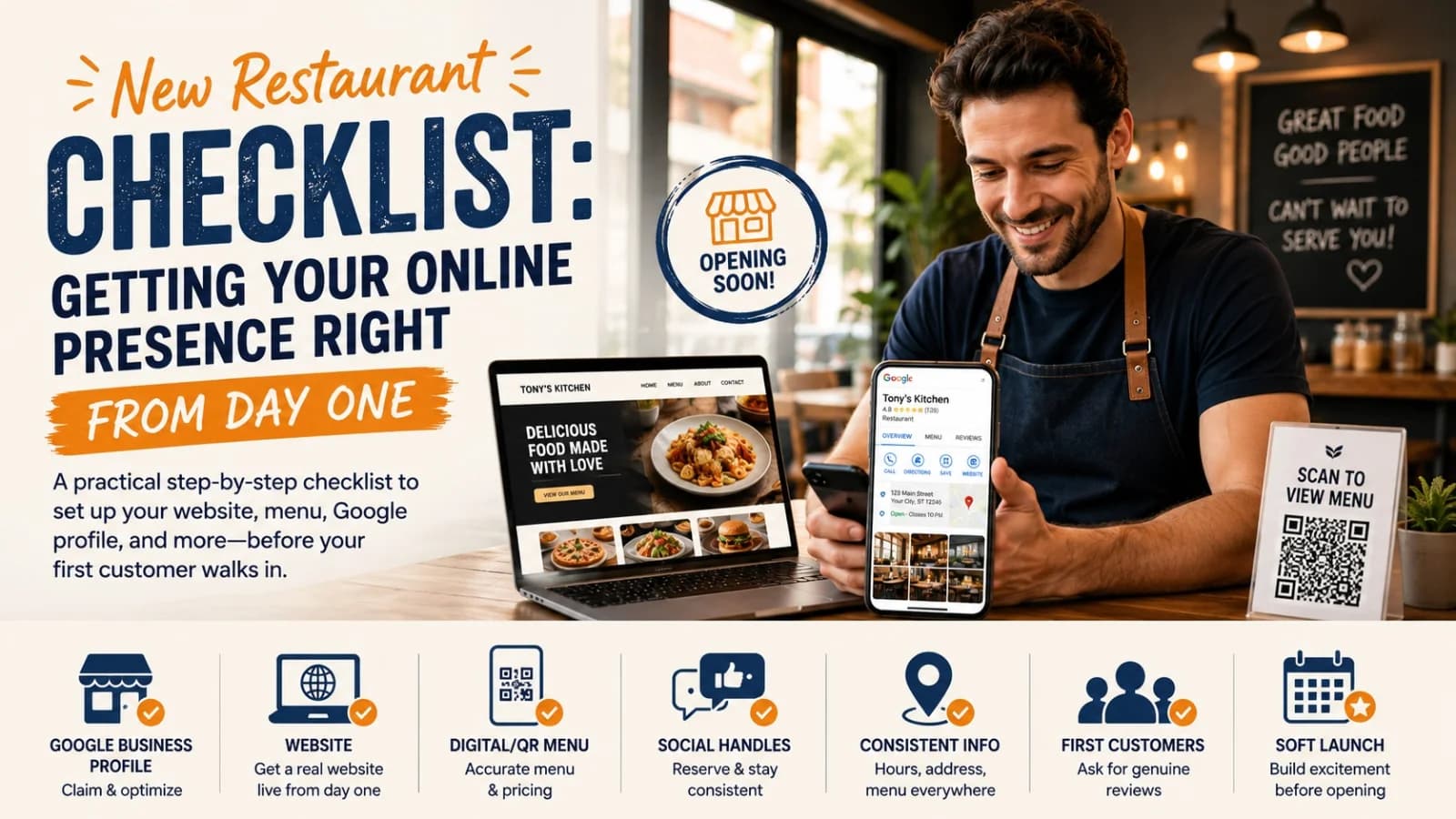
New Restaurant Checklist: Getting Your Online Presence Right From Day One
A practical, ordered checklist for getting your restaurant's website, Google profile, menu, and social presence right before, during, and after opening week — not scrambled together at the last minute.
3 Sept 2026 · 12 min read
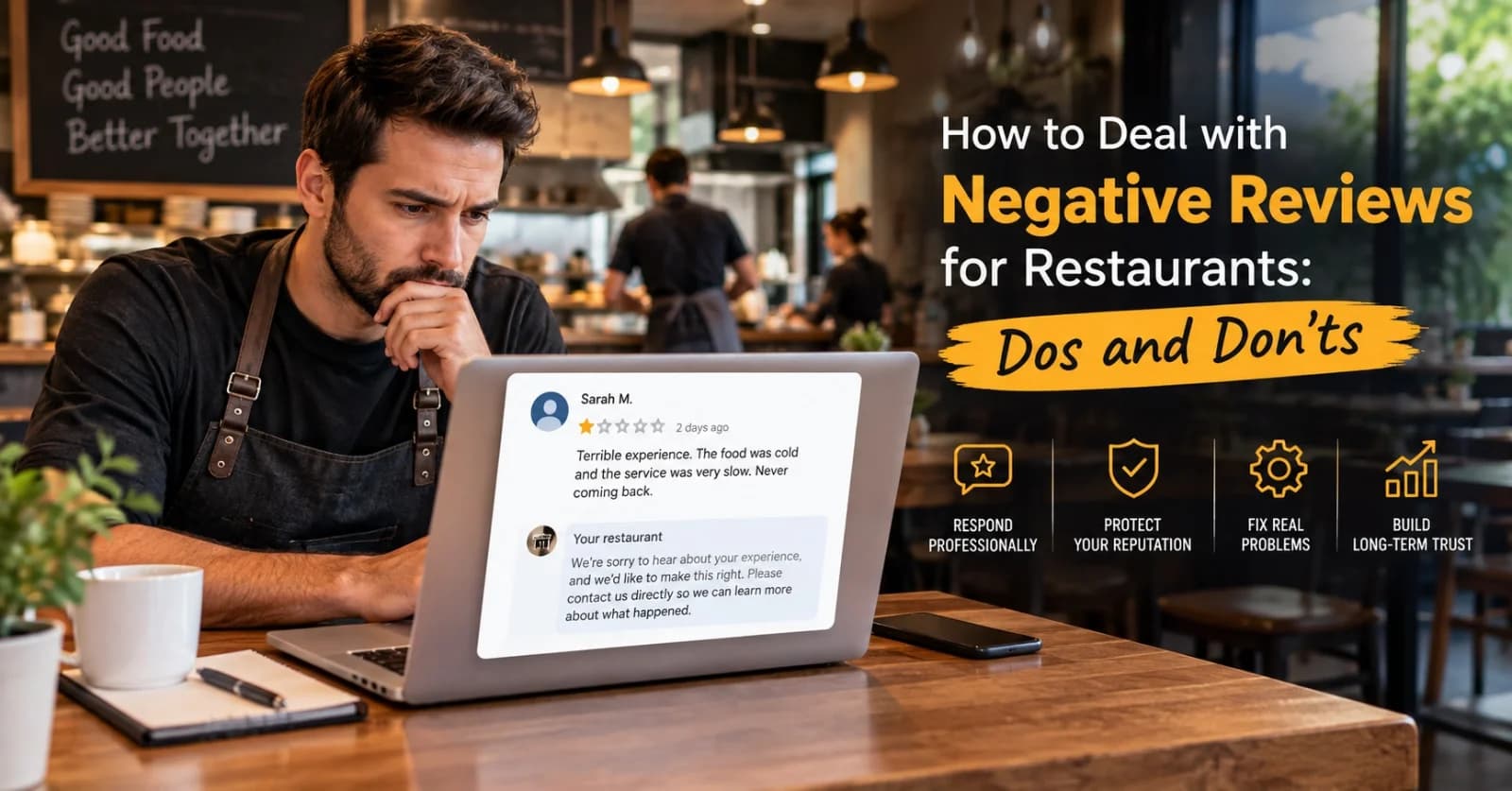
How to Handle Negative Restaurant Reviews: A Practical Dos and Don'ts Guide
A bad review doesn't have to hurt your restaurant's reputation — how you respond to it does more work than the review itself. Here's a clear, practical dos-and-don'ts approach.
6 Sept 2026 · 14 min read
About Menuberg
Menuberg helps restaurants create professional websites and digital storefronts without complicated setup. Learn more.